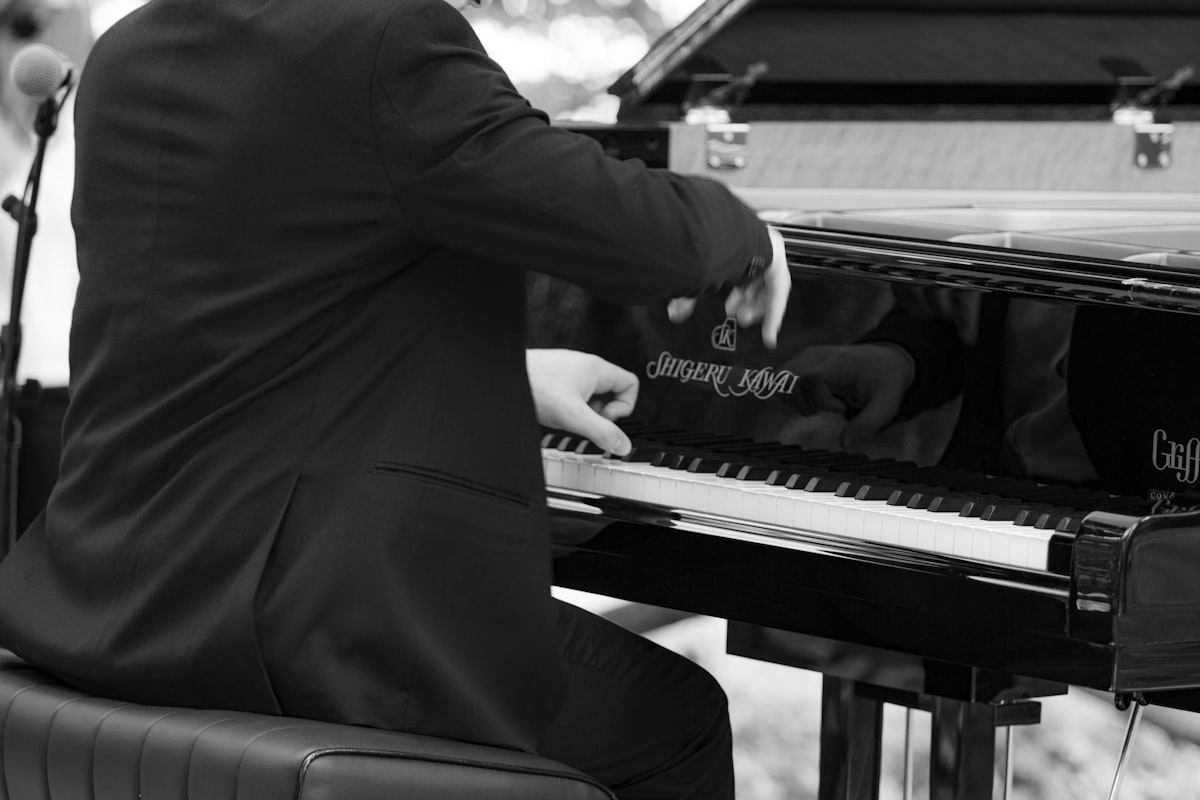
Great Balls of Fire: The Arrangement That Started It All
Some projects begin with a grand vision. Others begin with a single, reckless question.
For me, the question was: What would “Great Balls of Fire” sound like if Jerry Lee Lewis had been a symphonic composer?
The Spark
I’d been arranging for years — quietly, mostly for myself and the occasional performance. But “Great Balls of Fire” was different. There was something about the raw, physical energy of that song that felt like it was asking to be orchestrated. The pounding left hand. The rhythmic intensity. The sheer joy of it.
So I sat down and wrote it out. Not a polite, buttoned-up classical arrangement. A full-blooded orchestral reimagination that kept every ounce of the original’s wildness while unlocking something new — the colors, the counterpoint, the dynamic range that only an orchestra can deliver.
Going Viral
When I posted a performance online, I had modest expectations. A few hundred views, maybe. Some nice comments from friends and fellow musicians.
Instead, it crossed 100,000 views organically. No promotion, no ad spend. Just people discovering it and sharing it with the message I’d hear over and over again: “I didn’t know an orchestra could sound like that.”
The comments section became a kind of focus group I never planned. People who described themselves as “not classical music fans” were writing paragraphs about how the arrangement made them feel. Parents were sharing it with their kids. Musicians from every genre were breaking down the orchestration.
Something had connected.
Funding the Dream
The sheet music sales from that arrangement did something I never anticipated — they funded my first studio. What had started as a creative experiment became the financial foundation for everything that followed.
With that studio, I could develop new arrangements, record demos, and begin shaping the concept that would eventually become Michael Rainwater’s Classical Not Classical. Every arrangement I’ve written since then carries a piece of what I learned from “Great Balls of Fire”: that audiences are hungry for this. That the orchestra can be thrilling in ways most people have never experienced. That the line between classical and popular music is thinner than anyone thinks.
The Lesson
Looking back, the most important thing “Great Balls of Fire” taught me wasn’t about orchestration or viral marketing. It was about permission.
Audiences don’t need to be educated into loving orchestral music. They already love music. They love melody, rhythm, emotional intensity, surprise. The orchestra delivers all of those things at a level no other ensemble on earth can match.
The only thing standing between the orchestra and a massive new audience is the assumption that they wouldn’t be interested.
They are. They’ve been waiting.
The “Great Balls of Fire” arrangement remains one of the most-viewed orchestral pop arrangements online. It is featured in the Classical Not Classical concert program.
More to Read
Press Release: Michael Rainwater's Classical Not Classical Announces World Premiere — Fall 2026
Carnegie Hall pianist Michael Rainwater announces Michael Rainwater's Classical Not Classical, a first-of-its-kind symphonic concert experience premiering Fall 2026 at Byers Theatre at City Springs in Sandy Springs, Georgia.
Looking Back: From Carnegie Hall to Classical Not Classical
How a Carnegie Hall debut and a viral arrangement of 'Great Balls of Fire' set the stage for a reimagined symphonic experience.