Reimagining the Symphony: Why the Piano Deserves Center Stage
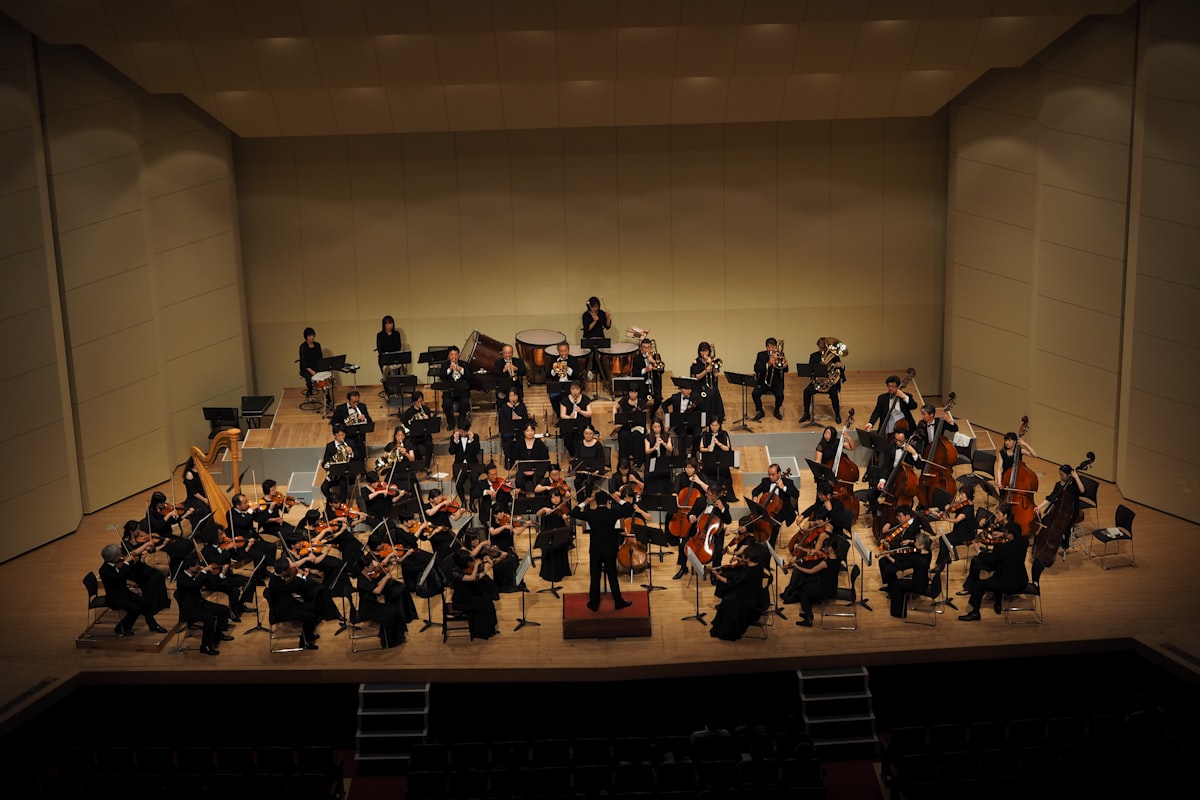
The symphony orchestra is one of humanity’s greatest collective instruments. Over a hundred musicians, breathing together, creating something no individual could produce alone. And yet, for many people today, the orchestra feels like a relic — something preserved in amber rather than alive in the present.
I don’t believe it has to be that way.
The Gap Between Craft and Culture
There’s a paradox at the heart of classical music’s relationship with modern audiences. The craft has never been higher. Orchestras today perform with a technical precision and interpretive depth that would have astonished composers of the past. But the cultural relevance — the sense that an orchestral concert is an event, something you talk about at dinner, something that shapes how you feel about the world — has faded.
The reason isn’t that people don’t love music. They do. More people listen to more music than at any point in human history. The issue is one of framing. The concert hall has become associated with reverence rather than joy, with obligation rather than discovery.
My mission is to restore the orchestra as a third space — a gathering ground for awe, joy, and connection.
Why the Piano?
When I began developing Michael Rainwater’s Classical Not Classical, the question I kept returning to was: What if the piano could do what a vocalist does?
A great singer doesn’t just carry a melody — they carry a story. They move their body, they connect with the audience, they make every note feel like a conversation. The piano has that same expressive range. It can whisper, it can roar, it can swing, it can break your heart. But in the traditional orchestral setting, the piano is usually either a soloist in a concerto (formal, distant) or an accompanist (invisible).
CNC puts the piano in the role of the pop star. Not as a gimmick, but as a genuine artistic choice. The piano carries the emotional narrative that audiences instinctively understand from decades of listening to great vocalists — and the orchestra becomes the world’s most incredible backing band.
Not a Medley Show
This distinction matters. A medley show strings together familiar tunes for recognition value. Classical Not Classical is structured as a narrative arc — a two-act symphonic experience where each arrangement builds on the last, where the emotional journey has shape and direction.
The arrangements themselves are original. They’re not transcriptions or reductions. They’re reconceptions — asking what a song like “Bohemian Rhapsody” or “Stairway to Heaven” would sound like if it had been born in the orchestra pit rather than the recording studio.
The orchestra doesn’t need to be saved. It needs to be unleashed. That’s what this project is about.
More to Read
Why Film Composers Are the New Beethovens
The most important orchestral music of the last fifty years wasn't written for the concert hall. It was written for the movies. And that should tell us something.
Why Pop Music Belongs in the Concert Hall
Pop and rock anthems weren't born in the orchestra pit — but they carry the same emotional DNA as the great symphonic works. Here's why bringing them into the concert hall isn't dumbing down classical music. It's completing it.
"The Orchestra Is Dying" — What If It's Not?
Every decade produces another wave of obituaries for the symphony orchestra. But the data tells a more complicated story — and the real crisis might not be what we think it is.